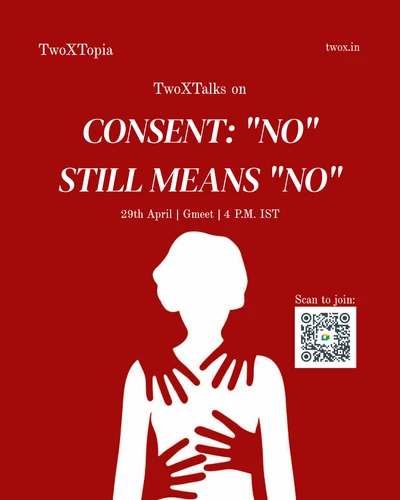
Consent - No still means No. Join our live podcast on 29th April about this topic at 4pm IST
Why do we make shows about things like sexual assault, just to say ‘this is wrong’?
Who is this actually meant for?
Who is the target audience for this?
Some time ago I watched Chiraiya (a series on marital rape) &
this question stayed with me since then.
Because let’s be honest,
→ A rapist isn’t watching a show & thinking, “I should change.”
→ A survivor isn’t watching it to relive their trauma.
→ And most “good people” don’t need a show to tell them that rape is bad.
So then who is it really for?
It’s for the people in between :
→ The ones who think rape is wrong, but still wonder,
“Can it really happen in a marriage?”
→ The ones who’ve never said no, even when they wanted to.
→ The ones who’ve heard a “no” but didn’t take it seriously the first time.
→ The ones who keep asking repeatedly until the other person feels pressured to say "yes" after a series of "no"
Consent isn’t always loud.
It’s not always a clear “no.”
Sometimes it’s hesitation.
Sometimes it’s silence.
Sometimes it’s saying “yes” just to avoid what happens if you say “no.”
And that’s where it gets uncomfortable.
Because this isn’t about “bad people” vs “good people.”
It’s about awareness.
It’s about the grey areas we don’t question enough.
And that’s exactly why a conversation about consent is needed.
Tomorrow on 29th April, @Mali & I will sit and talk about this topic,
openly, honestly, and without the usual filters on our live TwoXTalks podcast.
🗓 Date: Wednesday, 29th April
⏰ Time: 4 PM IST
🎙 Platform: https://meet.google.com/czw-xyiu-vtj
If you’ve ever been unsure about what consent really looks like in real life, or just want to listen and understand better you can join in.
TwoXTalks by TwoXTopia | A space built for conversations like this.
Event Details
Explore more ways to connect
Ask questions, host events, or join activities
Comments
No comments yet
Be the first to share your thoughts!